
Building a “Zen” garden, and keeping it simple
The concept of a zen garden may be different from my loose use of the term “zen” garden. Traditional Japanese dry landscape gardens, or karesansui, developed within Japanese Buddhist and Zen traditions, often use carefully arranged rocks and gravel or sand to represent elements of nature. Some of the most famous examples, such as the garden at Ryoan-ji in Kyoto, date back to the medieval period and were designed as spaces for contemplation.
Mine is definitely not an authentic karesansui garden. I’m borrowing the idea of creating a simple, peaceful space for contemplation, but I've taken the concept in a very different direction. Rather than sand and rakes, I’ve prioritized native plants, a simple water feature, and the all-important mulch.
I made what you see here in a single growing season that started only a couple months after moving in.
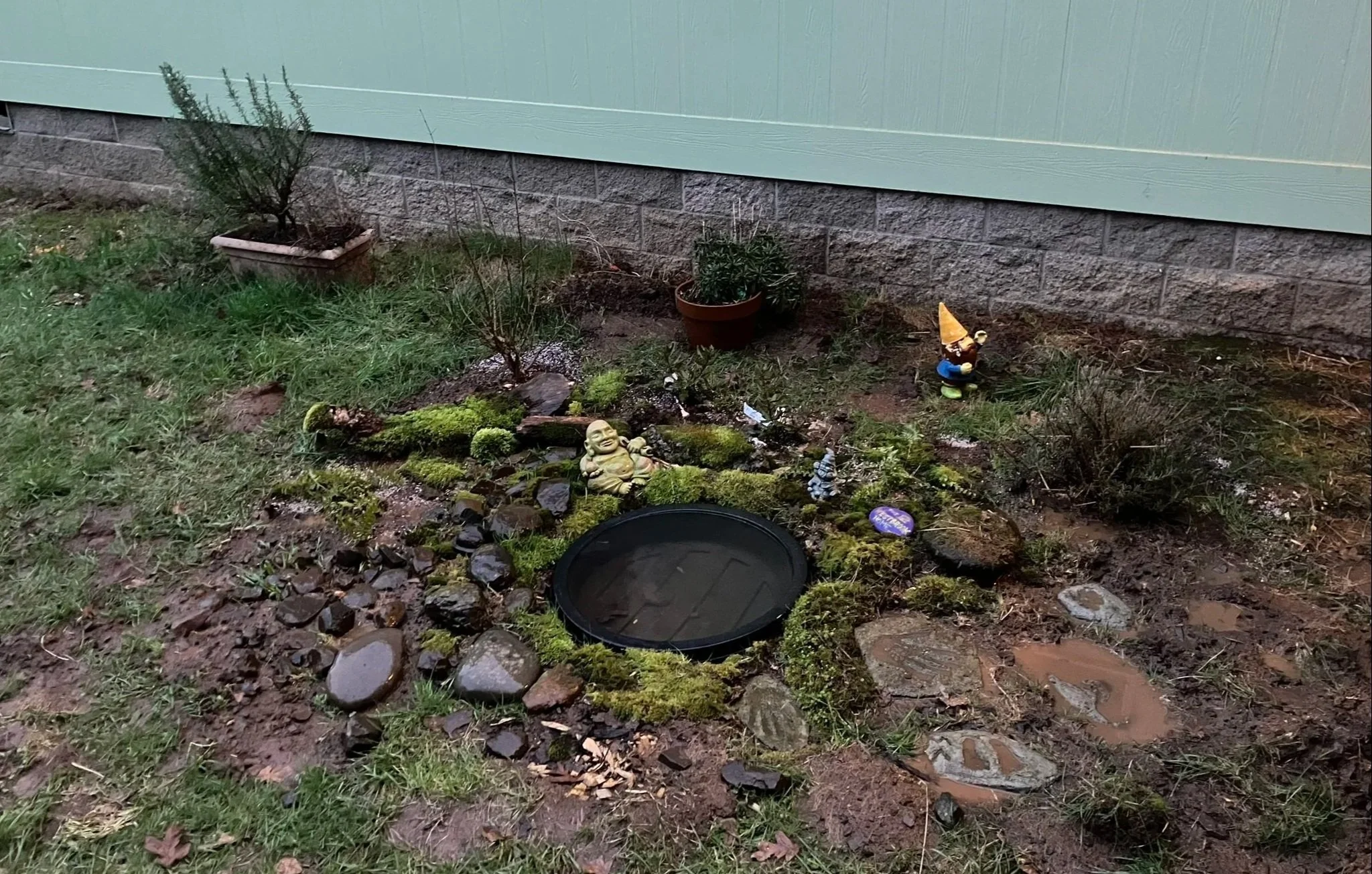
When I arrived, this was a barren patch of clay and invasive grasses — including false dandelion, wild carrot, and thistle. I wanted to see how much life I could bring into a very small space, without including complex features like a waterfall or a bridge, and also doing it on a budget. You can see the house before we moved in below (left) and the first phase of my zen garden below. The moss was sourced from the property, and the concrete steps and clay decor we made by hand.
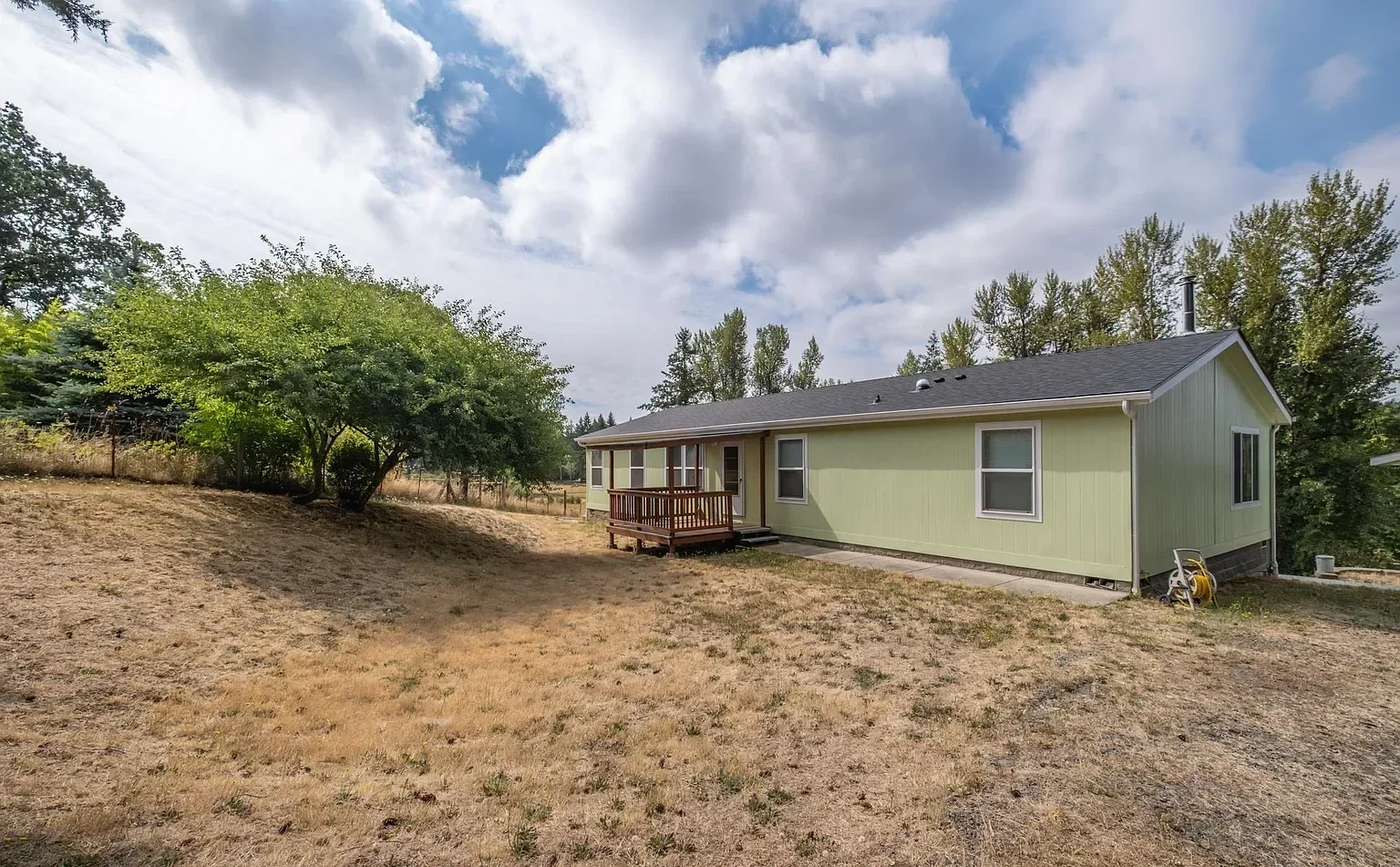
The area next to the porch, seen here before modifications
The first phase of my “zen” garden on a rainy Oregon day
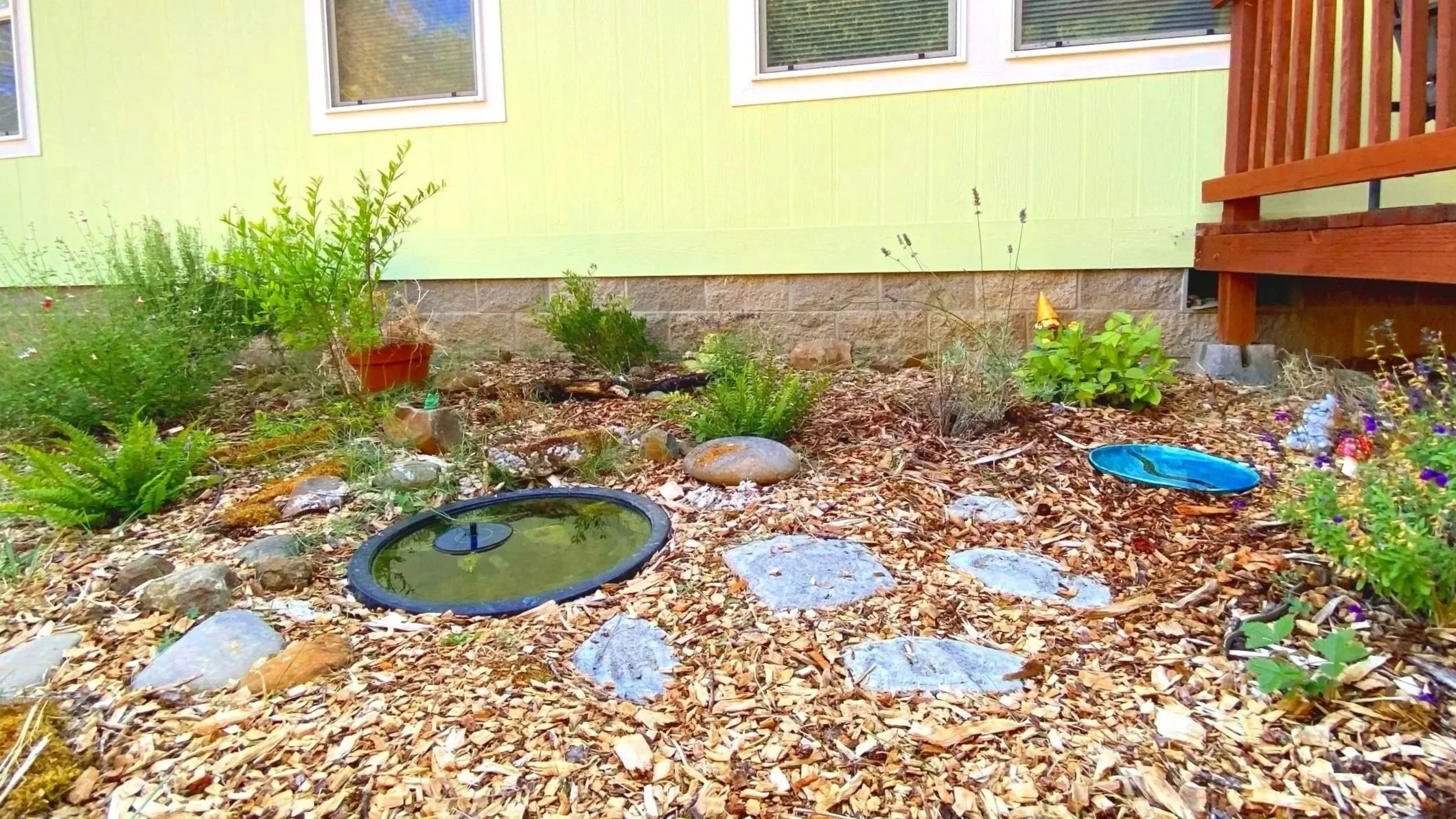
I started with a simple, low-maintenance water feature. The local hardware store had pond-liners, and this was the smallest (and cheapest - $25) liner I could find. The solar fountain (bought online less than $30) works great to keep the water moving, discourage mosquito breeding, minimize algae growth, and apparently act as a bird bath.
I use mosquito dunks and an affordable algae treatment, but those are optional. Another option I’ve tried for mosquito maintenance is mosquito fish or goldfish that feed on the larva.
One of the best parts of adding water was seeing what eventually found it. I’ve discovered frog and salamander eggs, drone fly larvae, microorganisms, and plenty of other small life I probably would have overlooked before (If you haven’t seen drone fly larva before, you should look it up right now).
The plants I introduced here were mostly free. I harvested and germinated many myself, sometimes with the help of friends like Shirley and Lee, or bought plants for a few dollars at nearby nurseries and plant sales.
I brought in some types of Salvia, purple sage, and “hot lip” sage. They aren't native, but they produce abundant flowers that feed a multitude of pollinators and are highly drought tolerant. They can grow quickly and need to be managed, but I see that as a perk since I can regularly prune back the beautiful blooms in the spring and summer, and they replenish quickly. I also never have to buy flowers for the wife ;).
Furthermore, the smell of freshly cut sage, rosemary, or lavender flowers filling the house is a vibe for me (better than smelling the usual wet dirty dog funk we got up in this place).
I also introduced my herb garden of rosemary, thyme, and oregano — it can be seen in the photo above in the old plastic planter, turning to dust, before I planted them. I added an apple and pomegranate tree, both of which are drought tolerant, produce beautiful blooms, and happen to provide some of my favorite fruit. We also have two productive Oregon beech plum trees already established nearby, which provide additional food and cover for birds.
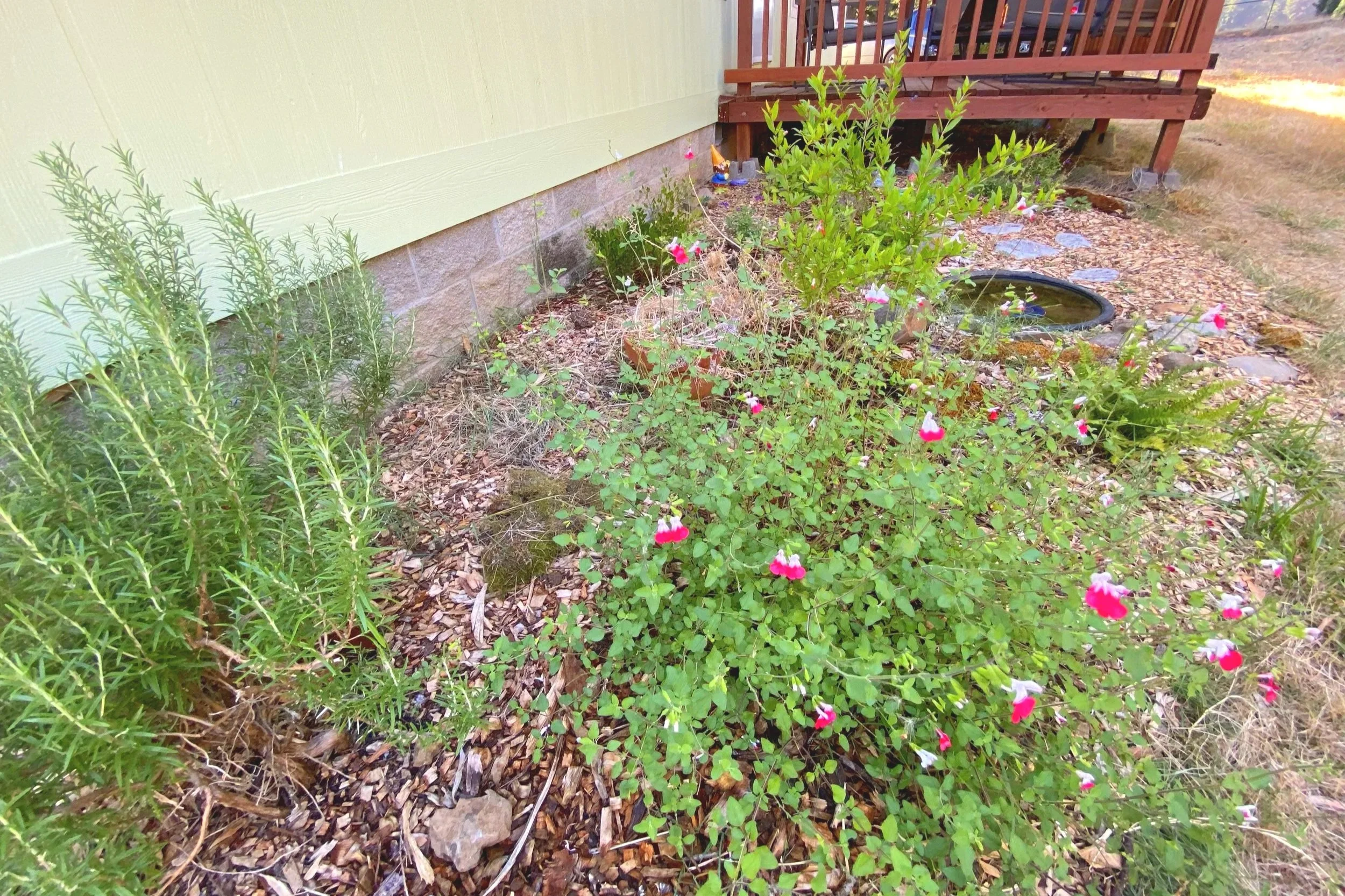
The natives I put in this area — which can’t be more than 30 square feet — were salal, native strawberry (you read that right), manzanita, Douglas aster, Large-Flowered Blue-Eyed Mary (Collinsia grandiflora), and several sword ferns.
I planted some native Douglas fir (which you can often find for free) on the nearby hillside as well. These will eventually provide additional habitat, shade, erosion control, water-cycle benefits, carbon storage, and improved air quality.
The mulch was free because I found a nearby tree-removal company that gives away the chipped tree waste. I’m not picky when it comes to mulch because it does the trick: reducing soil evaporation, decomposing and improving soil microbiome, providing habitat for beneficial insects, and reducing weed growth.
I put all of this together and something interesting happened.
What started as roughly 30 square feet of gravel, clay, and *weeds began to attract life.
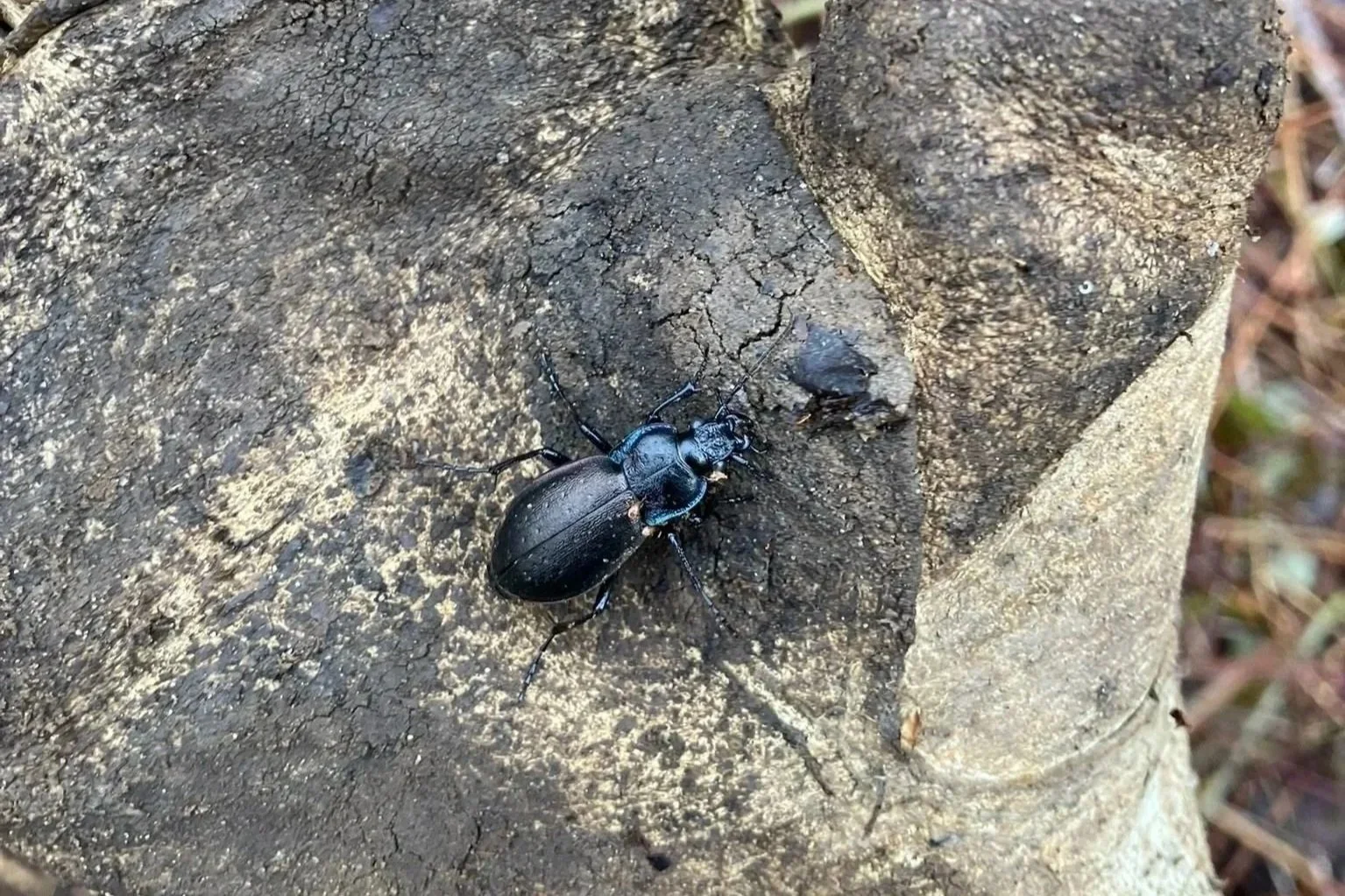
I’ve personally seen at least 10 different bird species, several snakes (IDK), two frog species, and two salamander species visiting or using this little area. I've watched pollinators feed from the flowers throughout the growing season, and just yesterday I sat on the porch and watched a snake slither into the base of my purple sage to bask. These species were not here before. To me, the presence of a multitude of species (biodiversity) is an indicator of a beneficial environment for native plants and animals.
*Plants that are not native can sometimes become invasive when they have qualities such as mass seed production, aggressive competition with native species, or no resource value for the native autotrophs and heterotrophs that make up the surrounding ecosystem.
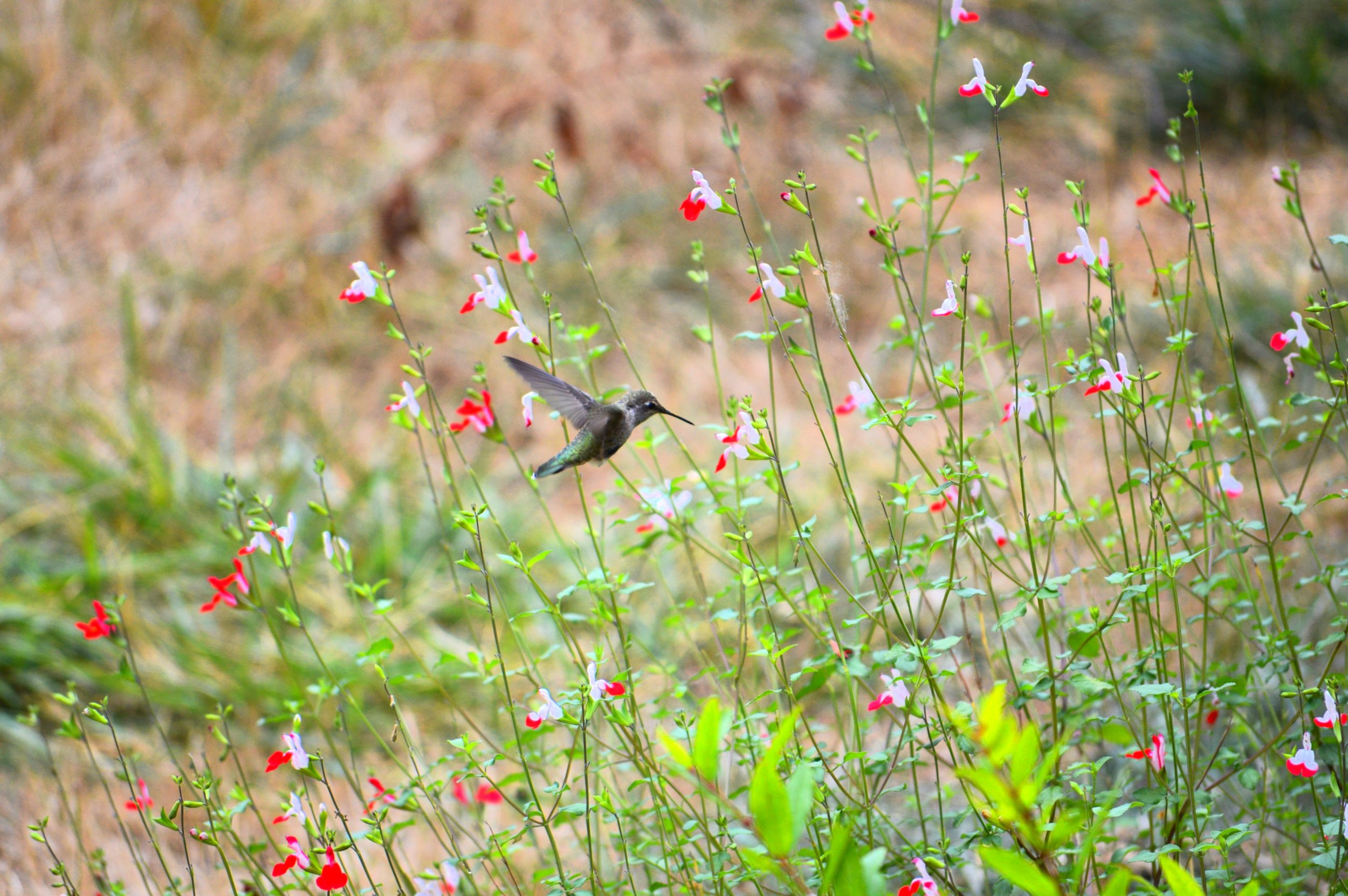
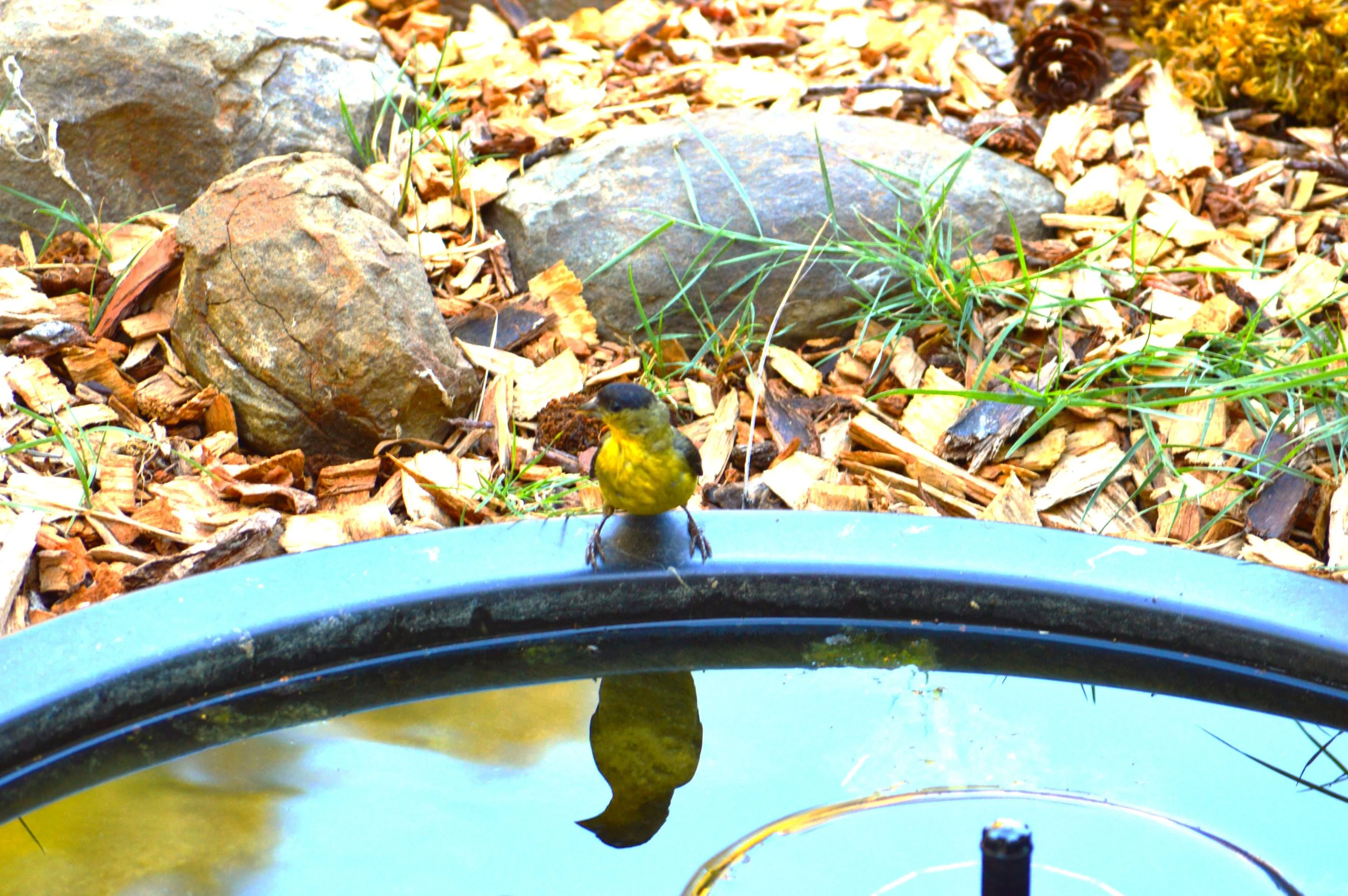
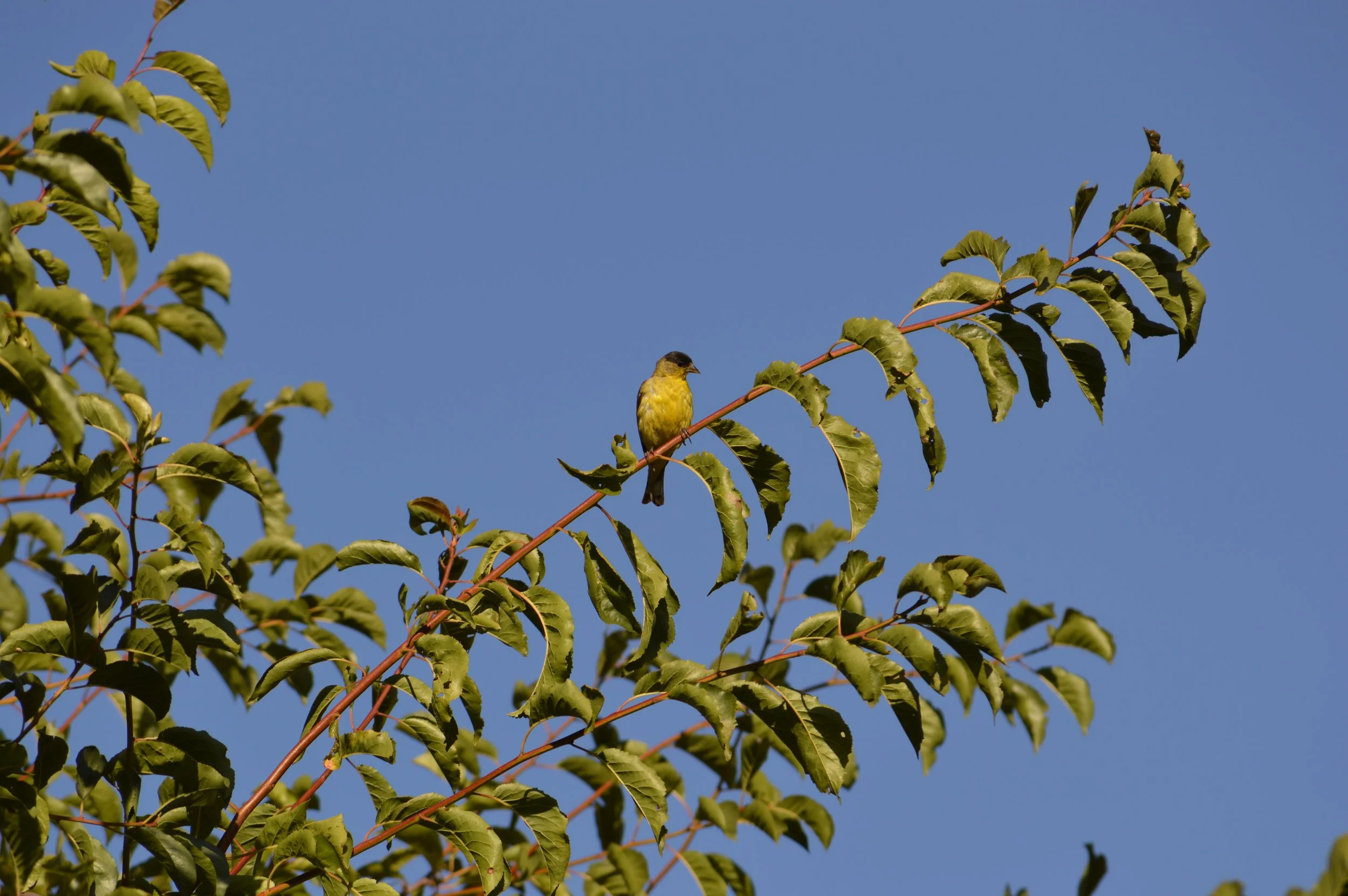
Humming birds feed on the rosemary, “hot lip”, and purple sage flowers - sometimes they play in the hose when I’m watering. Species of bird, like Goldfinch, drink water and wash off in the pond.
Insects bury themselves into the mulch, along with decomposers returning the nutrients into the soil and amending the clay.
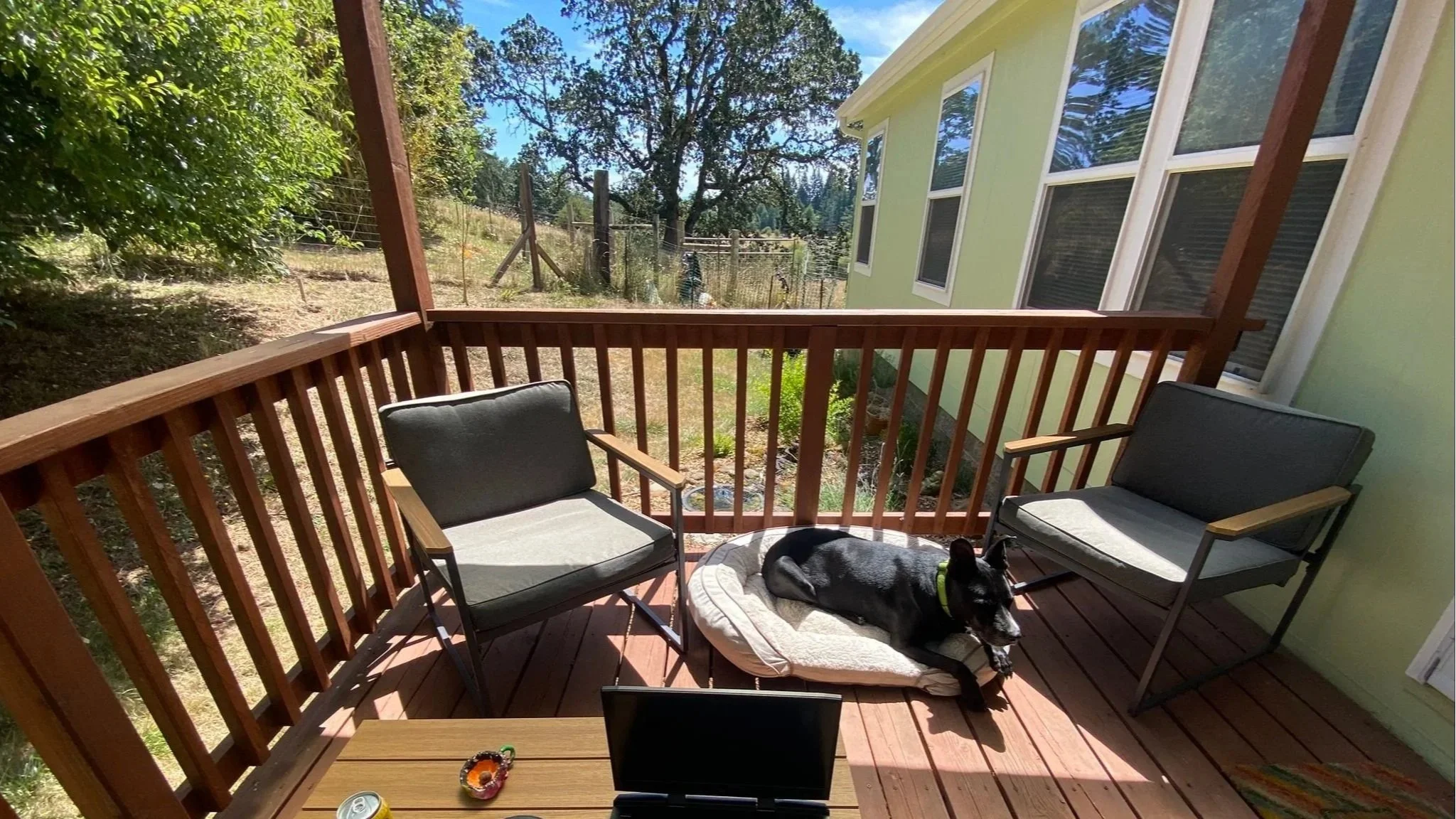
The transformation cost me less than $80 dollars (I got a great deal on rocks, I know a guy) and you can spend a bit more to make it zero maintenance with drip line, if you’d like. I mean, you can spend as much or as little as you want (if I had more time I’d tell you about a colleague of mine building his own river in his yard). You can also spend way less on plants than I did. You could easily buy plants when they’re cheap in Spring and spend less than $30 on all of your plants - I’m envisioning someone planting nothing but herbs or lavender experiencing just as much success. Also, the harvest of flowers or edible food is a huge bonus on top of the improved aesthetics and bird songs (dog, I’m literally watching a hummingbird feed 10 feet from my face right now - and you can have this too). The porch next to the garden provides my ideal home office, as you can see below.
Native seeds can be harvested everywhere, you just have to start by identifying them (using online resources, apps like “Seek”, local organizations, or regional species ID books). Then you take your free seeds and you plant them in soil — although sometimes they have special needs in order to germinate. The best part about working with native plants in your landscaping and species reintroduction projects is that they need fewer inputs, like water. California Poppy are an excellent example of something that can easily be propagated in the PNW. The seeds are easy to harvest and very prolific, and the flowers themselves grow well in poor soil with no additional water. Imagine that, growing plants to restore habitat (a beautiful legacy that will outlive all of us) that costs nothing. Beautifying environment, providing habitat and sustenance for native species, and it requires zero additional energy once they’ve been planted. Of course, including a little water, compost, and mulch will make your “Zen” garden flourish - for you and the native inhabitants.
What is most important about my garden is that it became functioning habitat, and that brings me Zen. You see, I am happiest with my bare-feet planted firmly in my “zen” garden.
This is the part of this project that I find most exciting. Habitat restoration doesn't always have to mean restoring hundreds of acres, removing massive dams, replanting forests, or taking on a complex conservation project. Those things are important too, but ecological restoration can also begin with a small budget and a dead patch of ground. It’s easy to feel powerless reading about worsening wildfires, climate change, rainforest destruction and all of the subsequent death and destruction of our times. That is why I’m here to tell you that this is a small change that will provide habitat and potentially lead to restoration of an ecosystem. Doing this enough, even with these small improvements, can forever change the world. Imagine if cities spent more time turning grey infrastructure into green infrastructure - living walls on exteriors of building, trees on roofs and patios, restoring riparian habitats and wetlands. Gardens like mine will also act as “bioswales” - a natural buffer of soil and native plants that process/filter precipitation and water run-off before recharging groundwater and aquifers below. Roots retain moisture important for symbiotic relationships between fungi and plant. Plant enough vegetation, and you can also change local hydrology.
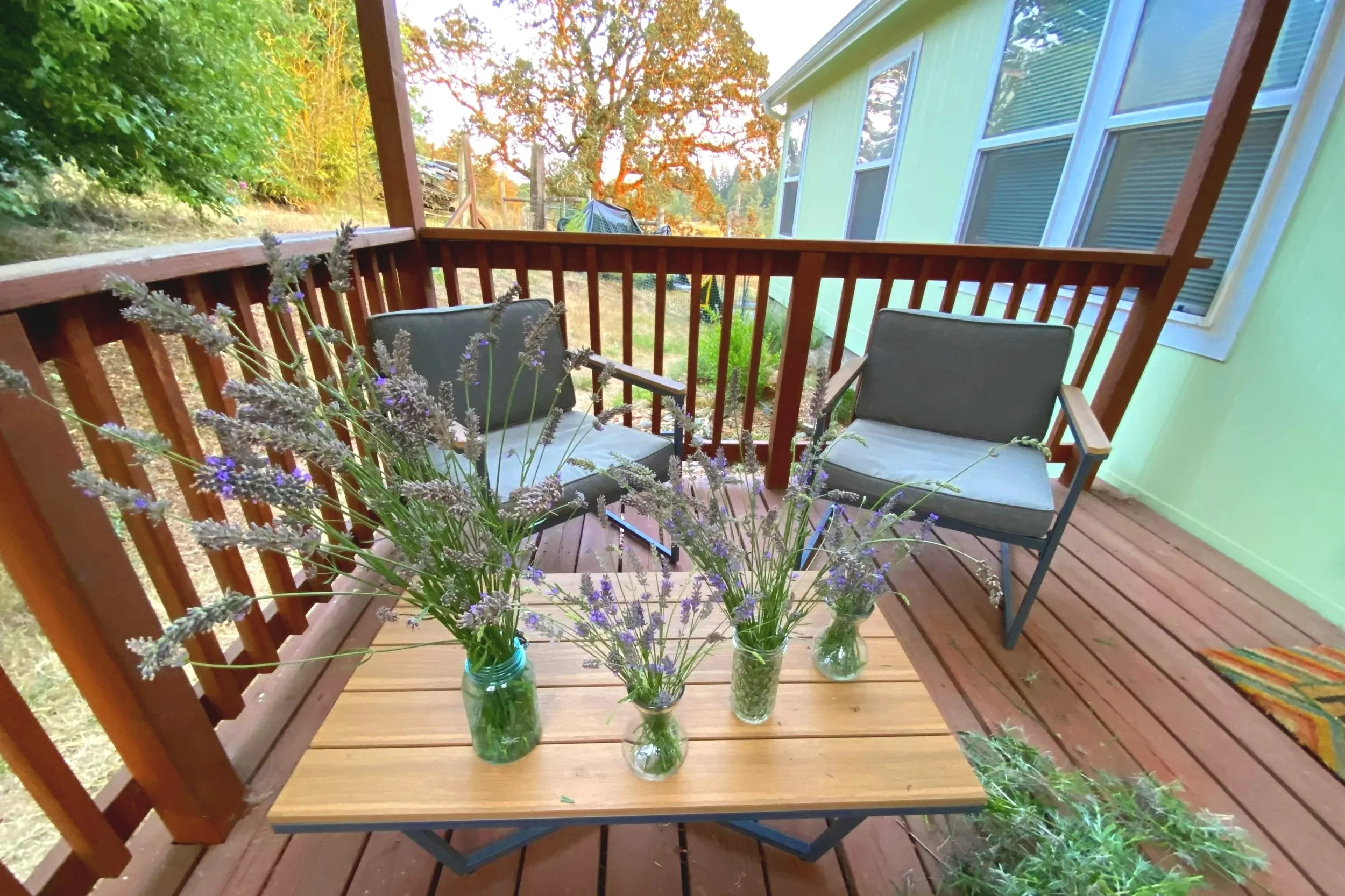
If you adapt this plan to be more productive by introducing more crops, instead of the pollinator garden I've prioritized, you can move toward something more like regenerative agriculture. But you don't need to choose between food production and habitat, either. With some planning, the same space can provide food, flowers, shelter, water, and resources for wildlife.
You don’t need lots of money to change your surrounding, and you don't need 5 acres.
You can do this in a front yard, backyard, patio, along a local creek, in a planter box, within a median, or even in a neglected corner of a property. The scale can be tiny. What matters is creating opportunities for life where there weren't many before.
A small pond provides water. Native plants provide food and shelter. Trees provide structure, shade, carbon storage, and habitat. Mulch protects the soil and creates another layer of life. A collection of small spaces can become much more meaningful when they begin connecting with one another ecologically.
The photos on this page tell the story better than I can: the transformation from clay and weeds to plants that now provide habitat as well as sustenance and beauty.
This isn't a scientific experiment, it’s an exploration of something that I enjoy that brings me “zen”, and it also just happens to benefit everything else that lives here too.
It’s also proof of something else: You don't have to restore an entire ecosystem to start restoring one.
Have Land That Needs This?
If your property could use habitat restoration or you want to bring native species back to your land, let's talk. Book a consultation and we'll walk your site, assess what's possible, and map a staged plan.